
Liberty Petroleum is awarded Exploration Acreage offshore Somalia
Highlights
- Award of three exploration contracts offshore Somalia covering 15,000 km2
- Offshore Somalia is widely regarded as one of the most prospective unexplored Deepwater basins in the world
- Modern seismic data has revealed the presence of trapping structures capable of hosting giant oilfields
Liberty Petroleum Corporation (“Liberty” or the “Operator”) is pleased to announce the signature of three Production Sharing Agreements (“PSA”) between the Federal Government of Somalia and Liberty’s affiliated company, Petro Quest Africa Corporation. The three contracts were signed at a ceremony attended by His Excellency Abdirisaaq Omar Mohamed, Minister of Petroleum and Mineral Resources, Abdulkadir Aden Mohamud, Chairman, Somali Petroleum Authority and Lane Franks CEO of Liberty (Figure 1).
Following the recent discovery of commercial oil and gas in Kenya, Uganda, Tanzania and Mozambique the oil industry has re-assessed the petroleum prospectivity of East Africa. Liberty has identified at least four potential source rock intervals which are expected to be present based on direct evidence or inferred presence based on recent exploration results in East Africa. Although historic onshore wells in Somalia have encountered oil and gas only two shallow water wells have been drilled along it 3,000 km Indian Ocean coast. After the formation of the Federal Government of Somalia in 2012 several regional 2D seismic surveys were acquired. The interpretation of these seismic surveys has provided insight into the petroleum potential identifying a variety of very large structural and stratigraphic trapping geometries (Figure 2a & b) some of which appear to have seismic attributes which could be indicative of the presence of hydrocarbons (Figure 2c) – Illustrative seismic sections courtesy of TGS.
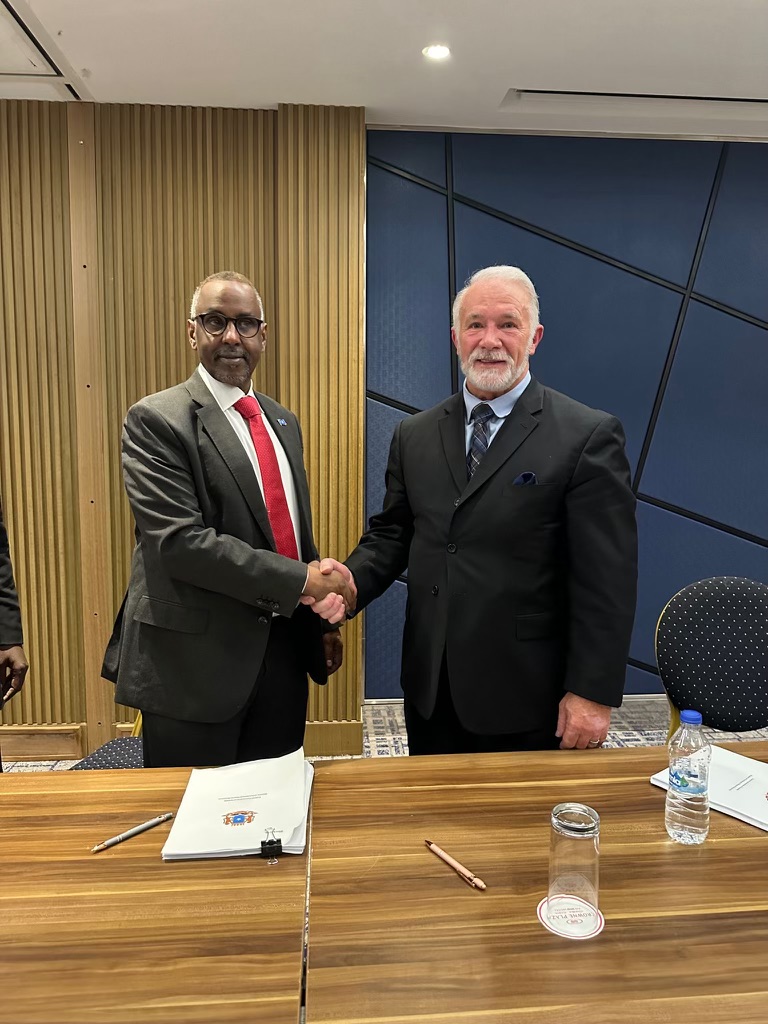

Figure 2a – reef structure in the vicinity of Block 131.
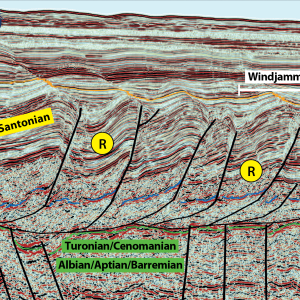
Figure 2b – thrust structures in blocks 190 & 206.
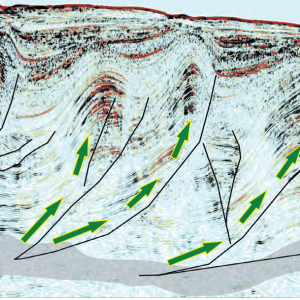
Figure 2c – AVO anomalies within thrust belts in Blocks 190 & 206.
Each of the PSA’s has an initial 5 year term (Figure 3) during which Liberty will evaluate the existing seismic data with a view to high-grading areas within each area to acquire substantial 3D seismic surveys. Subject to the results of the 3D seismic there is scope to undertake drilling during the initial term or as part of the work programme obligation during the renewal periods. The PSA’s were signed in accordance with the provisions of the Somali Petroleum Law which was published in 2020.
| Liberty Petroleum Production Sharing Agreements | |||
|---|---|---|---|
| Blocks | 131 | 190 | 206 |
| Area (km2) | 5000 | 4978 | 5000 |
| Water Depth (m) | 1500-3000 | 1500-3000 | 2500-3500 |
| 2D Seismic Data (km) | 1569 | 1087 | 887 |
| Licence Term (yrs) | 5 | 5 | 5 |
| Work Program | Drilling | Drilling | Drilling |
| Renewal Terms (yrs) | 3+2 | 3+2 | 3+2 |
| Work Program | Drilling | Drilling | Drilling |
Figure 3 – Summary details of the PSA’s
Block Map
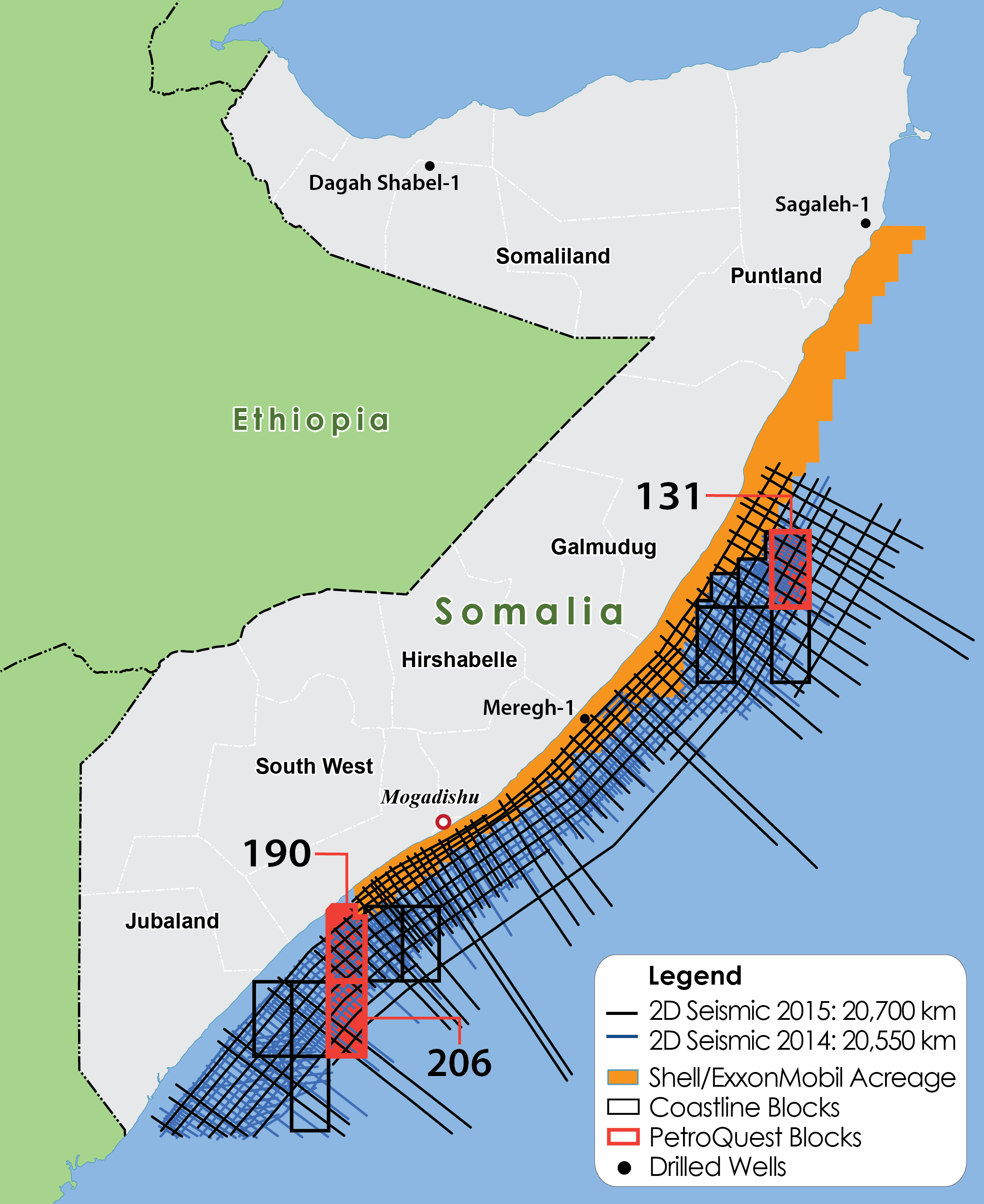
About Blocks 131, 190 & 206
Block 131 comprises 5000 km2 on the Northeastern flank of the Mid-Somalia High (MSH). Two petroleum plays are recognized as being present;
- A syn/pre-rift (Liassic) lower Jurassic oil play, dominated by conventional clastic reservoirs, (with oil shows) penetrated in the conjugate margin, offshore Seychelles, is interpreted to be intercalated with oil prone (organic-rich) lacustrine source rocks (primary migration evoked) that also function as competent seals. These rocks are mapped with high-confidence within syn-rift half grabens visible on the seismic across the entire license area and the play is interpreted (from the conjugate margin) to be in the late oil to early gas generative window.
- An earliest post-rift sequence of middle to an upper Jurassic aged carbonate oil prone play with seismically mapped bioherm features that are 10’s of kilometres in length. These are interpreted to be part of a middle Jurassic barrier reef systems.
- Stratigraphic traps comprising the reefs are mappable on the seismic as are large 100 km2 combined traps where reefs have grown and are now structurally draped along the apices of underlying rotated tilted fault-blocks of the syn-rift. The seismic clearly shows mappable barrier reef systems, overlain by an interpreted thick upper Jurassic shale sequence.
Block 190 comprises 4978 km2 on the northern-most margin of the Juba-Lamu Basin. Three key petroleum plays are recognized as being present, all associated with the drift sequence of the East African Passive Margin;
- A passive margin, ‘late drift’ sequence of shales and sandstones of Tertiary age, deposited at the mouths of antecedent drainage conduits (rivers and deltas) of early Paleocene to early Eocene age. The play is caught up, in block 190 within the Baraawe Thrust Belt (BTB), which is a series of propagated toe thrusts and associated anticlines that provide a significant number of drill worthy structures. This play type is proven as hydrocarbon bearing billions of barrels of oil equivalent (boe) offshore Mozambique where it is almost identical in age.
- Along the inboard margin of the block, a pervasive down-thrown roll-over is developed against a major basin bounding synthetic normal fault that extends for tens of kilometres along the basin margin. Both an upper and lower Cretaceous roll-over is clearly imaged on the seismic.
- At the south-eastern margin of the block, middle-to-upper Cretaceous deep-water fan systems are clearly imaged on the seismic to the south and these may form both stratigraphic and combined traps. Hydrocarbons are trapped within these deep-water fan and supra-fan systems offshore Tanzania to the south.
Block 206 comprises 5000 km2 within the central to north-eastern portion of the Juba Basin. Two key petroleum plays are recognized as being present, one dominated by structural compression and a second, a stratigraphic play, comprising lobate basin floor fans of Cretaceous age, not unlike those that host the super-giant oil discoveries offshore Namibia, such as Venus-1X (2022) and Graff-1X (2022).
- Overall, the geology comprises a passive margin, ‘late drift’ sequence of shales and sandstones, early to late Cretaceous in age, that were deposited at the mouth of major river systems of early Albian to latest Campanian in age. The play is caught up within the northeastern reaches of the Kismaayo Thrust Belt (KTB), which is a series of propagated toe thrusts and associated anticlines that provide a significant number of large structural targets. Structures include Windjammer-1 lookalikes, a large natural gas discovery made offshore Mozambique in 2010.
- The second play, a series of detached Basin Floor Fans (BFF), comprises Albian aged turbidites deposited directly on top of Aptian aged source rocks (thought to be within the peak oil window).
Liberty Petroleum Corporation CEO Lane Franks commented – “After more than 10 years of positive and fruitful dialogue with the Government of Somalia we are honoured to be signing these three exploration contracts. It truly is a collective achievement that is historic in nature. We are aware of the responsibility that now lies on our shoulders to explore and hopefully develop the petroleum resources within these blocks in a manner that delivers maximum benefit to the people of Somalia”.
Authorized by the Board of Liberty Petroleum Corporation and Petro Quest Africa Corporation.
For further information please contact:
Lane Franks – CEO, Director
Lane@LibertyPetroleumCorporation.com
About Liberty Petroleum Corporation
Since formation in 1997, Liberty has acquired over 17 distinct exploration blocks worldwide resulting in the expenditure of over $2 billion in oil and gas exploration and development investment. Liberty credits many larger companies for this accomplishment. The giant Poseidon gas/condensate field operated by Conoco Phillips was one of Liberty’s project areas in the offshore Browse Basin of Australia. The Poseidon field was one of the ten largest global discoveries of 2009. Shortly thereafter Liberty facilitated the drilling of the Longtom well with Nexus Energy the Gippsland Basin VIC P54 permit. The well had an all-out open flow calculation equivalent of 99 MMCF per day and produced for many years. In their most recent project in the offshore Gippsland Basin, ExxonMobil drilled three wells in the VIC P70 permit, including the Sculpin well, drilled in the deepest water depths ever undertaken in Australia.
About Petroleum Exploration in Somalia
Somalia remains one of the last truly frontier passive margins in the world. Only two exploration wells have been drilled offshore along the 3,000 km-long margin, and both wells are in the shallow near-shore area in less than 100m water depth. Exploration in Somalia began onshore in 1956 with the drilling of the Sagaleh-1 well, followed by a number of wells drilled mostly in the north of the country. These clearly established the presence of a working Jurassic hydrocarbon system, as illustrated by the 1959 Dagah Shabel-1 discovery well. Following successes within the Yemeni Jurassic basins during the 1980s, a great deal of renewed interest was shown in the country however a deterioration in the security situation in the 1990’s ushered in a period where Somalia remained inaccessible to exploration companies for more than 25 years.
During this time, the majority of Somalia’s legacy geological and geophysical data were lost or destroyed. Following the re-establishment of a Federal Government in 2012 an offshore 2D seismic program for Soma Oil and Gas was undertaken in 2014 with over 20,500 km of data acquired across a 122,000 km2 area. In 2015, a further 20,000 km Multi-Client (MC) seismic data was acquired by Spectrum which has been used to de-risk source rock presence, distribution, and maturity. There are strong indications of widespread distribution of good quality source rocks that modelling has shown to be in the oil window, potentially charging significant traps.
Four source rock intervals in Somalia have been identified: a pre-rift Karoo source of Triassic age; a syn-rift Jurassic source deposited in rifts formed by the breakup of the Gondwana super-continent post-rift Late Cretaceous; and Early Tertiary source rocks deposited in discrete global ocean anoxia events. Basin modelling has identified the potential for all four of these source environments to be (or have been) mature for oil and gas generation in discrete areas across the Somalian offshore.
The recent seismic data from offshore Somalia have revealed extraordinary structures, in an oil-prone frontier province that have never been seen or explored before. The data correlate closely with the potential field results, and the most recent seismic is imaging gigantic structures that have never been mapped until now. Offshore Somalia appears to have all the ingredients for finding big volumes of oil and gas, with reservoirs, source rocks and seals and multiple play-types including large fold-belt structures and enormous reef closures.
The southern part of the Somali offshore is remarkably similar in many respects to the Orange Basin in Namibia and the Rovuma Basin in Mozambique which are now both established as extraordinary super-giant hydrocarbon provinces. In all three basins there are gravity slides that detach onto source rocks which create down-slope thrust belts. In the Orange Basin and Somali Basin there are detachment surfaces at multiple levels. In the Rovuma and Orange basins most of the hydrocarbons are trapped in sands immediately in front of and under the fold belts. In the Rovuma Basin there are also some hydrocarbons trapped within the fold belt. All of these play types are present in the Juba-Lamu Basin offshore Somalia. The same prolific Aptian and Cenomanian/Turonian source rocks in Namibia are also believed to be present in the Juba-Lamu Basin where they appear to be in juxtaposition with potential fan sequences. The Somali offshore offers these analogue type plays plus a whole range of other play types with a wide range of potential petroleum system elements.